







Blog, Patek Philippe
Patek Philippe Calatrava: The Benchmark of Classic Watches
Aug
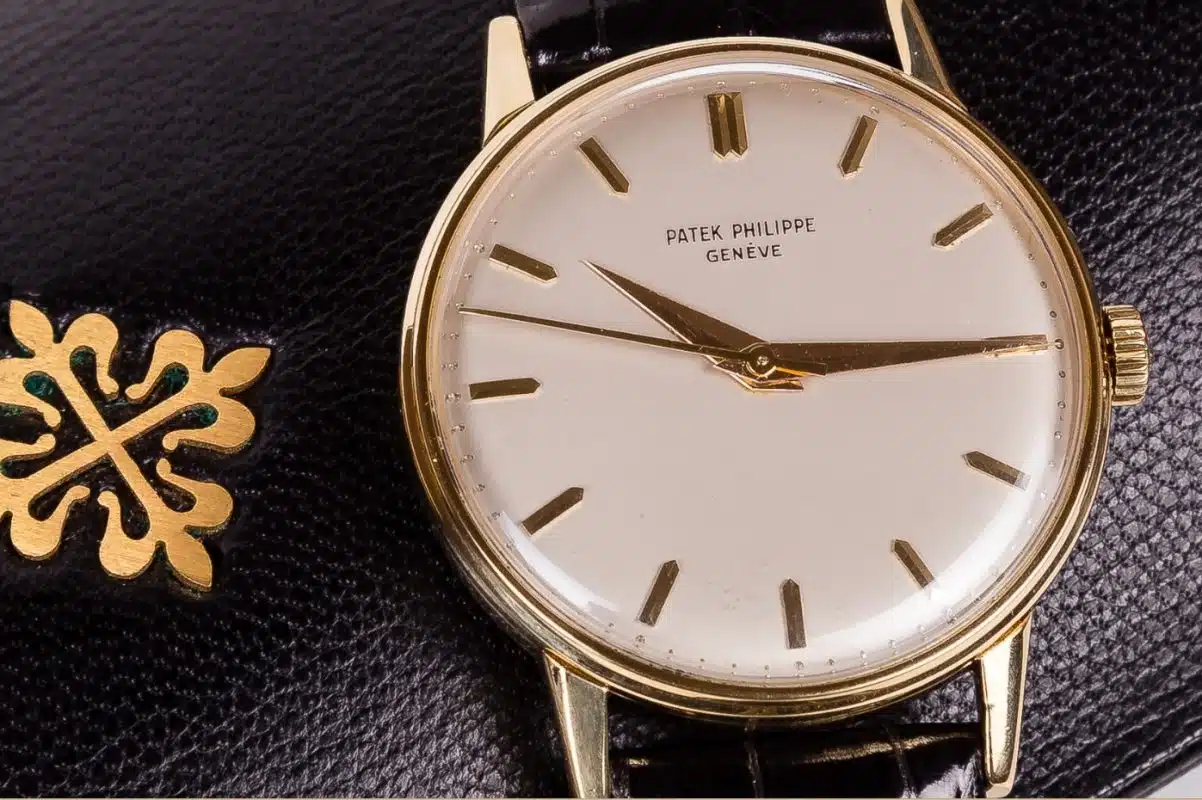
The Patek Philippe Calatrava stands as the undisputed paragon of dress watch excellence, embodying nearly a century of horological refinement and aesthetic purity. Since its inception in 1932, this collection has established itself not merely as a timepiece, but as a profound statement of understated luxury—a philosophy that has influenced every serious watchmaker who followed. In an age where ostentation often overshadows elegance, the Calatrava serves as a masterclass in how true sophistication whispers rather than shouts.
What is the Patek Philippe Calatrava and why is it considered the benchmark of classic watches?
The Calatrava represents the quintessential manifestation of Patek Philippe’s design philosophy, where form follows function in its purest expression. This collection emerged from the marriage of Swiss horological mastery and Bauhaus design principles, creating what industry insiders consider the archetypal dress watch. The Calatrava’s significance extends beyond mere timekeeping; it established the visual vocabulary that defines modern dress watch design across the entire industry.
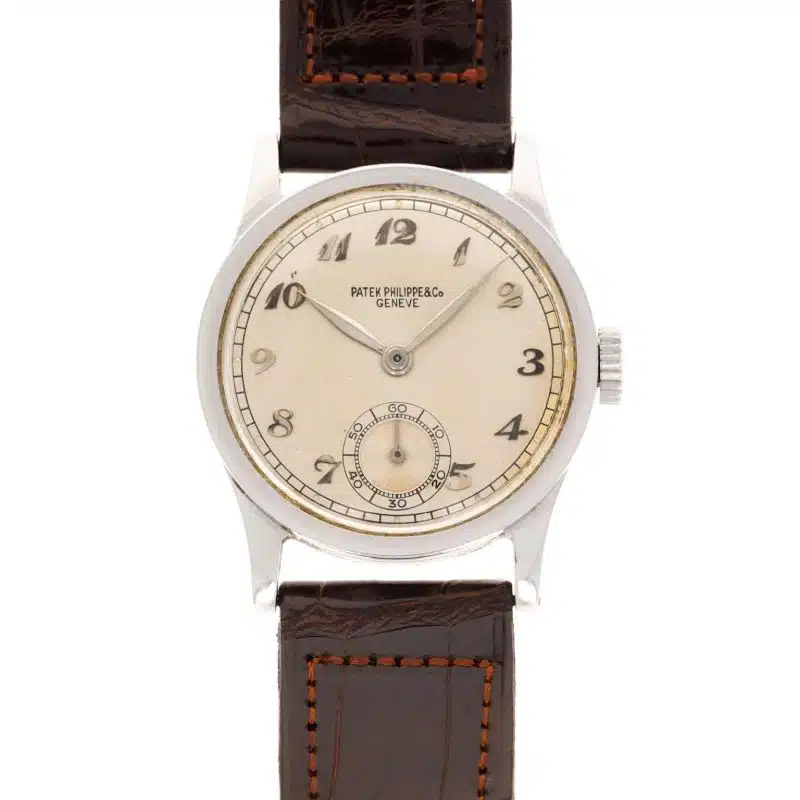
At its core, the Calatrava embodies horological purity—a commitment to essential function clothed in timeless elegance. The collection’s influence on contemporary watchmaking cannot be overstated; virtually every major manufacturer’s dress watch offerings draw inspiration from the Calatrava’s design DNA. This influence stems from its perfect balance of proportion, legibility, and refinement, achieved through decades of iterative refinement by Geneva’s most skilled artisans.
The Calatrava’s benchmark status is further reinforced by its role as a cultural touchstone. When Patek Philippe’s famous advertising declares, “You never actually own a Patek Philippe. You merely look after it for the next generation,” it is the Calatrava that most completely embodies this philosophy of generational stewardship. The collection represents not just a purchase, but an entry into a lineage of refined taste and appreciation for horological excellence.
How did the Patek Philippe Calatrava collection originate?
Who created the first Calatrava and when?
The inaugural Calatrava emerged during one of horology’s most challenging periods. In 1932, as the Great Depression ravaged global markets, the Stern family—owners of Patek Philippe’s dial manufacturing supplier—acquired the struggling Geneva manufacture. This pivotal moment marked not just a change in ownership, but the birth of modern Patek Philippe under the stewardship of Henri and Jean Stern.
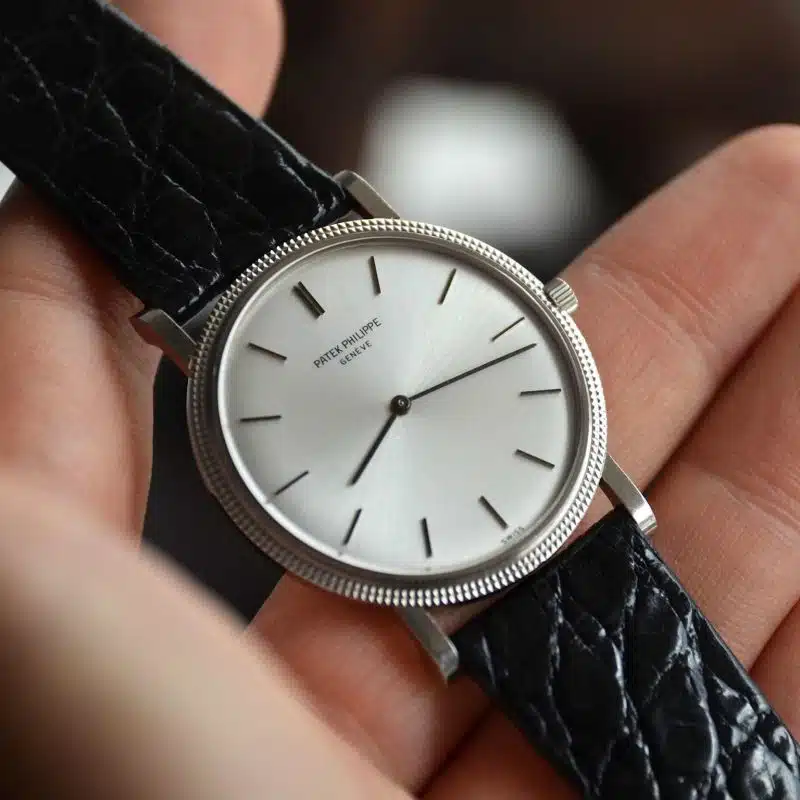
The first Calatrava, designated Reference 96, was introduced in 1932 as part of the Stern family’s ambitious restructuring of the company. This model represented a radical departure from the ornate pocket watches that had previously defined luxury timekeeping. Instead of competing with increasingly elaborate designs, the Reference 96 embraced radical simplicity—a 31mm gold case housing a manual-winding movement with subsidiary seconds at six o’clock.
Contrary to widespread internet mythology, the Reference 96 was not designed by an English horologist named David Penney, as frequently claimed across various sources. This attribution appears to be a modern fabrication that has proliferated through digital channels. The watch’s true genesis lies in the collaborative vision of the Stern family and their newly hired technical director, Jean Pfister, who brought organizational discipline and engineering excellence to the manufacture.
What was the design philosophy behind the early Calatrava models?
The original Calatrava embodied the revolutionary Bauhaus principle that form should follow function—a radical concept in luxury watchmaking of the 1930s. This German design movement, which emerged in the early 20th century, championed clarity, balance, and restraint over ornamental excess. Applied to watchmaking, this philosophy manifested in clean dial layouts, integrated lugs, and an overall aesthetic that prioritized legibility and proportion.
The Reference 96’s design represented a conscious rejection of the Art Deco styling that dominated luxury goods of the era. Instead of elaborate guilloché patterns, gemstone hour markers, or ornate case decorations, the Calatrava featured applied gold markers, clean white dials, and perfectly proportioned hands. This minimalist approach was revolutionary in its restraint, creating visual harmony through the careful balance of negative space and essential elements.
This design philosophy extended beyond mere aesthetics to encompass the mechanical aspects of the watch. The Reference 96 housed Patek Philippe’s first in-house movement, the caliber 12-120, which featured beautiful finishing despite being hidden beneath a solid caseback. This attention to unseen details reflected the Bauhaus belief that honest construction and quality materials were prerequisites for true beauty.
Why was Calatrava a turning point in Patek Philippe’s history?
The Calatrava’s introduction marked a fundamental transformation in Patek Philippe’s identity and market positioning. Prior to 1932, the manufacture had operated as a bespoke creator of complicated pocket watches for a narrow clientele of connoisseurs and collectors. The Great Depression had devastated this market, leaving Patek Philippe financially vulnerable and strategically adrift.
The Reference 96 represented the company’s first systematic approach to wristwatch production. Unlike previous models, which were catalogued individually by case numbers, the Calatrava introduced the concept of organized model families with consistent design languages. This organizational innovation enabled Patek Philippe to achieve greater production efficiency while maintaining its commitment to hand-finished quality.
More significantly, the Calatrava established wristwatches as legitimate expressions of luxury and sophistication. While many traditional watchmakers still viewed wristwatches as temporary novelties inferior to pocket watches, Patek Philippe’s commitment to the Calatrava demonstrated that wrist-worn timepieces could achieve the same levels of refinement and cultural significance. This prescient decision positioned the company at the forefront of the 20th century’s horological revolution.
What makes Calatrava the ultimate dress watch?
Why is the Calatrava’s design considered the gold standard of elegance?
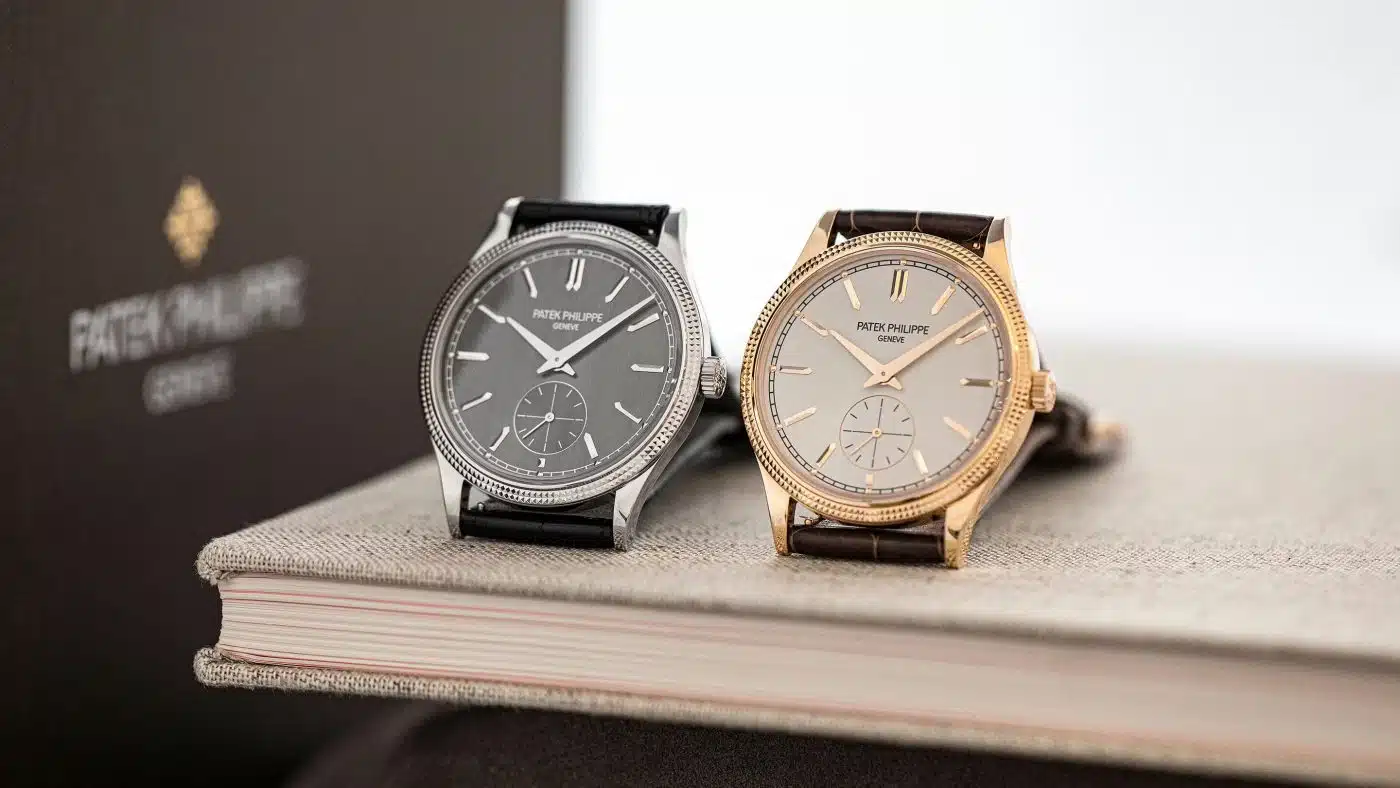
The Calatrava’s status as the ultimate dress watch stems from its mastery of proportional harmony—the delicate balance between case diameter, dial layout, and hand dimensions that creates visual coherence. This harmony is achieved through decades of refinement, with each generation of Calatrava models building upon the proportional discoveries of their predecessors.
The collection’s ultra-clean dials represent the apotheosis of legibility-focused design. Unlike sport watches that prioritize high-contrast visibility, or complication watches that showcase mechanical complexity, the Calatrava dial serves a single purpose: the elegant display of time. This singular focus enables designers to optimize every element for aesthetic perfection rather than functional compromise.
The Calatrava’s slim profile has become the defining characteristic of proper dress watch proportions. Early models measured just 8-9mm in thickness, allowing them to slip effortlessly beneath dress shirt cuffs—a crucial requirement for formal wear. This slimness is achieved through careful movement selection and case construction techniques that prioritize elegance over water resistance or shock protection.
What materials and movements are used in Calatrava watches?
Calatrava timepieces are exclusively crafted in precious metals—yellow gold, white gold, rose gold, and platinum—reflecting Patek Philippe’s commitment to materials that age gracefully and maintain their beauty across generations. The choice of precious metals over stainless steel reinforces the collection’s positioning as heirloom pieces rather than everyday tools.
The movements powering Calatrava watches represent the pinnacle of Swiss mechanical engineering. Contemporary models feature Patek Philippe’s latest generation of in-house calibers, including the advanced 30-255 PS with its twin barrel configuration and 65-hour power reserve. These movements incorporate cutting-edge technologies like Spiromax hairsprings and Gyromax balance wheels, demonstrating how traditional aesthetics can embrace technical innovation.
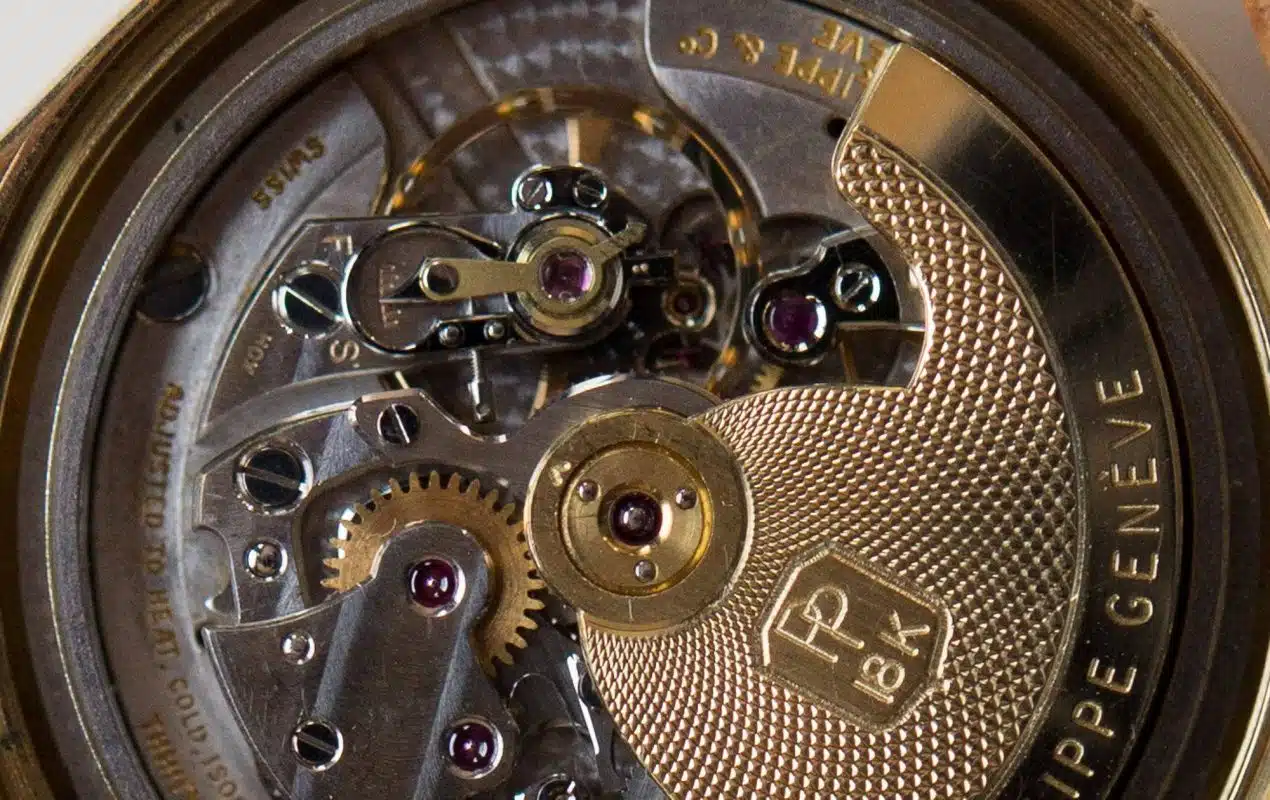
The finishing quality of Calatrava movements sets industry standards for hand-decorated mechanical watches. Each component receives meticulous attention, from the anglage on bridge edges to the perlage on main plates. This level of finishing is largely invisible to the casual observer, yet it represents hundreds of hours of artisanal work that distinguishes Patek Philippe from industrial manufacturers.
How does Calatrava compare to other classic dress watches?
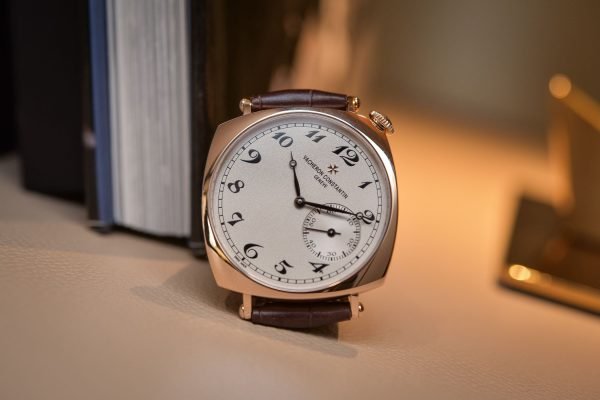
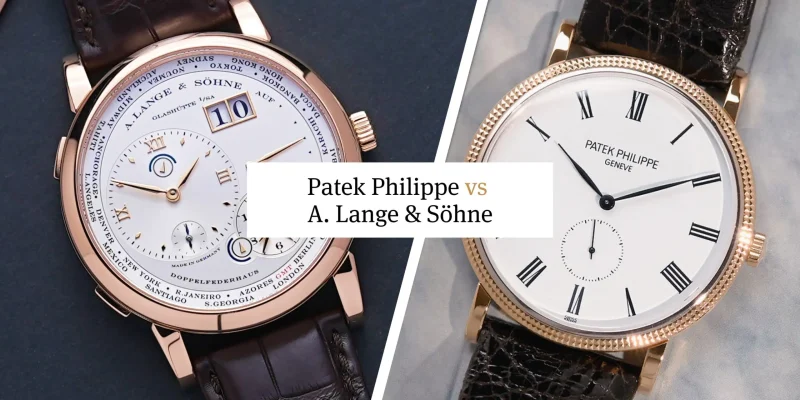
The Calatrava’s superiority over competitors lies in its uncompromising approach to quality at every level of production. While brands like Vacheron Constantin and A. Lange & Söhne produce excellent dress watches, none matches Patek Philippe’s combination of movement development, case finishing, and dial execution. This comprehensive excellence justifies the Calatrava’s premium pricing and waiting lists.
Heritage value distinguishes the Calatrava from newer entrants to the luxury dress watch market. The collection’s 90-year history provides authenticity that cannot be manufactured or purchased—it must be earned through consistent quality and cultural relevance. This heritage creates emotional connections between owners and their timepieces that transcend mere functional utility.
The Calatrava’s design purity remains unmatched in contemporary horology. While competitors often succumb to market pressures for larger cases, additional complications, or trendy materials, the Calatrava maintains its commitment to essential elegance. This disciplined approach ensures that Calatrava watches remain stylistically relevant across changing fashion cycles.
How has the Calatrava collection evolved over time?
Which Calatrava references became iconic?
The Reference 96 (1932-1973) established the collection’s foundational design principles and remains the most collectible vintage Calatrava. Its 41-year production run created numerous dial and case variations, making it a fascinating collecting category for enthusiasts seeking perfect examples of mid-century Swiss watchmaking.
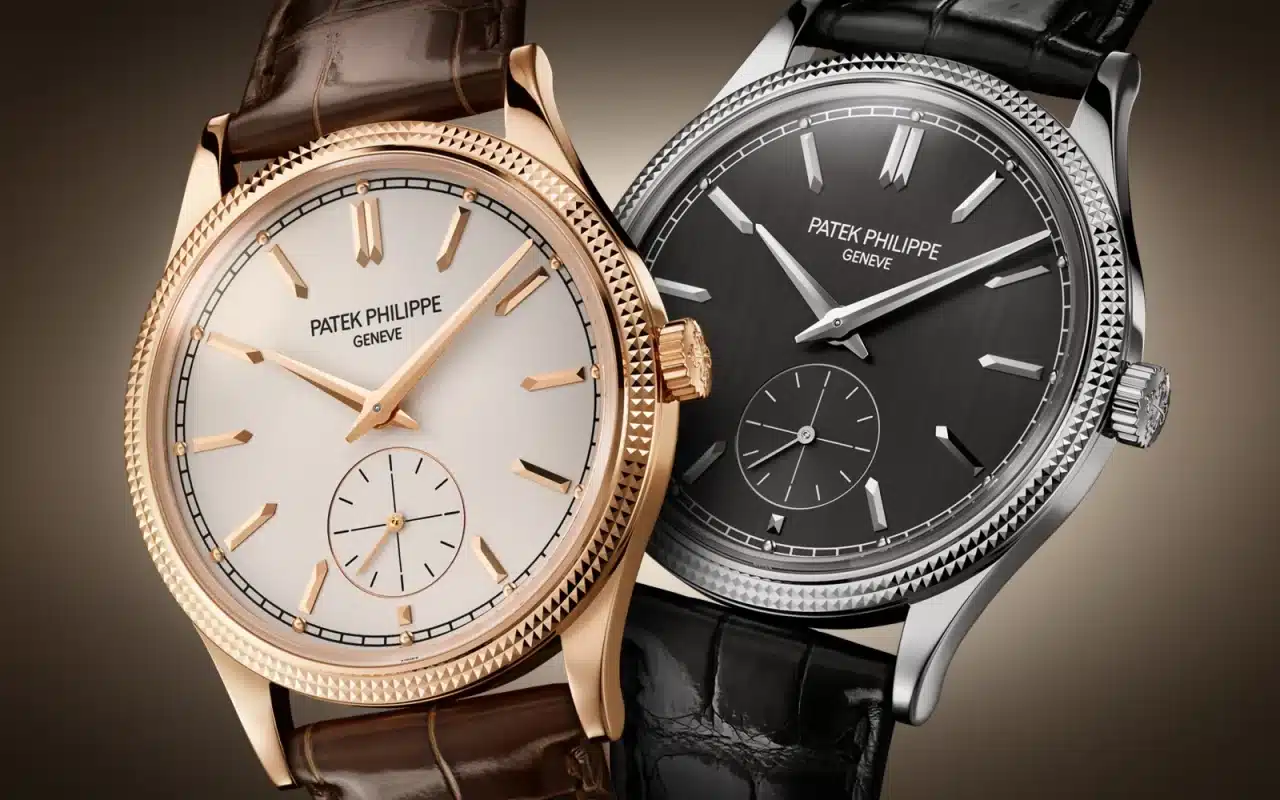
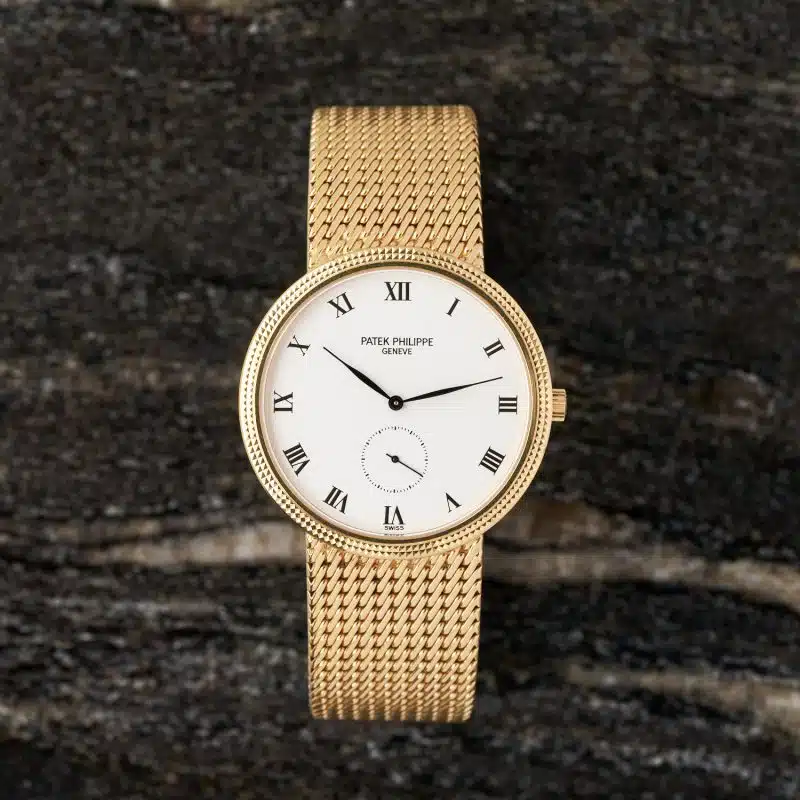
The Reference 3919 (1985-2006) revitalized the collection during the post-quartz crisis recovery. This model introduced the now-famous Clous de Paris hobnail bezel, a textured decoration that became synonymous with modern Calatrava design. The 3919’s 21-year production run made it the most recognizable Calatrava for an entire generation of watch enthusiasts.
Contemporary icons include the Reference 5196 (2004-present) and the Reference 6119 (2021-present), which represent modern interpretations of classic Calatrava values. The 6119, in particular, demonstrates how the collection continues evolving, featuring an enlarged 39mm case and the advanced caliber 30-255 PS movement while maintaining aesthetic continuity with the original Reference 96.
How has the design changed from the 1930s to today?
Modern Calatravas have grown considerably from their 31mm origins, with contemporary models ranging from 37mm to 40mm in diameter. This evolution reflects changing wrist sizes and fashion preferences, though Patek Philippe has resisted the industry trend toward oversized cases exceeding 42mm.
Dial execution has become increasingly sophisticated, incorporating techniques like vertical satin finishes, applied hour markers, and subtle color variations that were impossible with 1930s manufacturing methods. However, these technical advances serve the original design philosophy rather than overwhelming it with unnecessary complexity.
Movement technology has advanced dramatically while maintaining visual continuity with historical designs. Modern Calatrava movements feature anti-magnetic properties, precision regulation, and extended power reserves that vastly exceed their predecessors’ capabilities. Yet these improvements remain largely invisible to casual observation, preserving the collection’s timeless aesthetic character.
What new technologies or materials are used in modern Calatrava models?
The latest Calatrava movements incorporate Spiromax hairsprings—Patek Philippe’s proprietary silicon-based technology that provides superior magnetic resistance and temperature stability compared to traditional steel hairsprings. This material innovation improves timekeeping accuracy while maintaining the classical appearance of traditional mechanical movements.
Advanced balance wheel designs like the Gyromax system provide superior regulation and shock resistance through carefully calculated mass distribution. These technical improvements enable modern Calatravas to achieve chronometer-level accuracy while preserving the delicate proportions essential to dress watch elegance.
Case construction techniques have evolved to achieve thinner profiles without sacrificing structural integrity. Modern Calatravas utilize advanced metallurgy and precision machining to create cases that are both more robust and more elegant than their historical predecessors. These improvements demonstrate how technological progress can serve traditional aesthetic values rather than replacing them.
Which Calatrava models are most popular today?
Which models are most desirable for collectors?
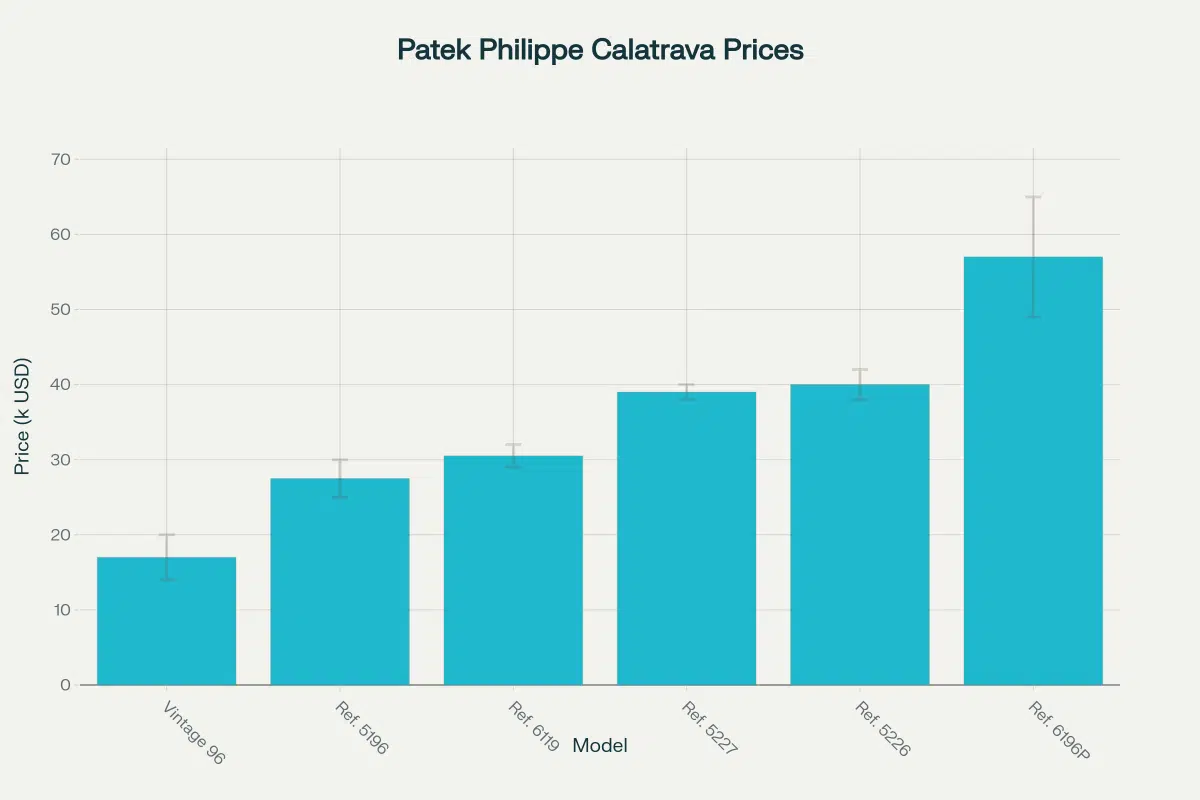
The vintage Reference 96 commands premium prices among serious collectors, with exceptional examples reaching $20,000 or more depending on condition and provenance. First-series models with LeCoultre movements and pristine dials represent the holy grail for Calatrava enthusiasts.
The Reference 5196, introduced in 2004, has become the modern classic for collectors seeking contemporary Calatrava ownership. Its combination of traditional aesthetics and modern reliability appeals to both vintage enthusiasts and practical users.
Limited editions and anniversary pieces like the Reference 3960 (150th anniversary model) achieve extraordinary prices at auction due to their historical significance and restricted production numbers. These special editions demonstrate Patek Philippe’s ability to create instant collectibles through careful curation and storytelling.
Which current Calatrava models are trending among buyers?
The Reference 6119 with its Clous de Paris bezel represents the current flagship of the collection, combining traditional hobnail decoration with the advanced caliber 30-255 PS movement. Available in both rose gold and white gold, these models have generated significant interest among contemporary buyers.
The Reference 5226 appeals to buyers seeking modern functionality within classic aesthetics, featuring a larger 40mm case, textured dial, and automatic movement with date display. Its contemporary proportions and practical complications make it an excellent daily-wear Calatrava.
Travel Time models like the Reference 5224R demonstrate how the Calatrava collection can embrace additional complications while maintaining its essential character. These pieces appeal to internationally minded collectors who require dual time zone functionality without sacrificing dress watch elegance.
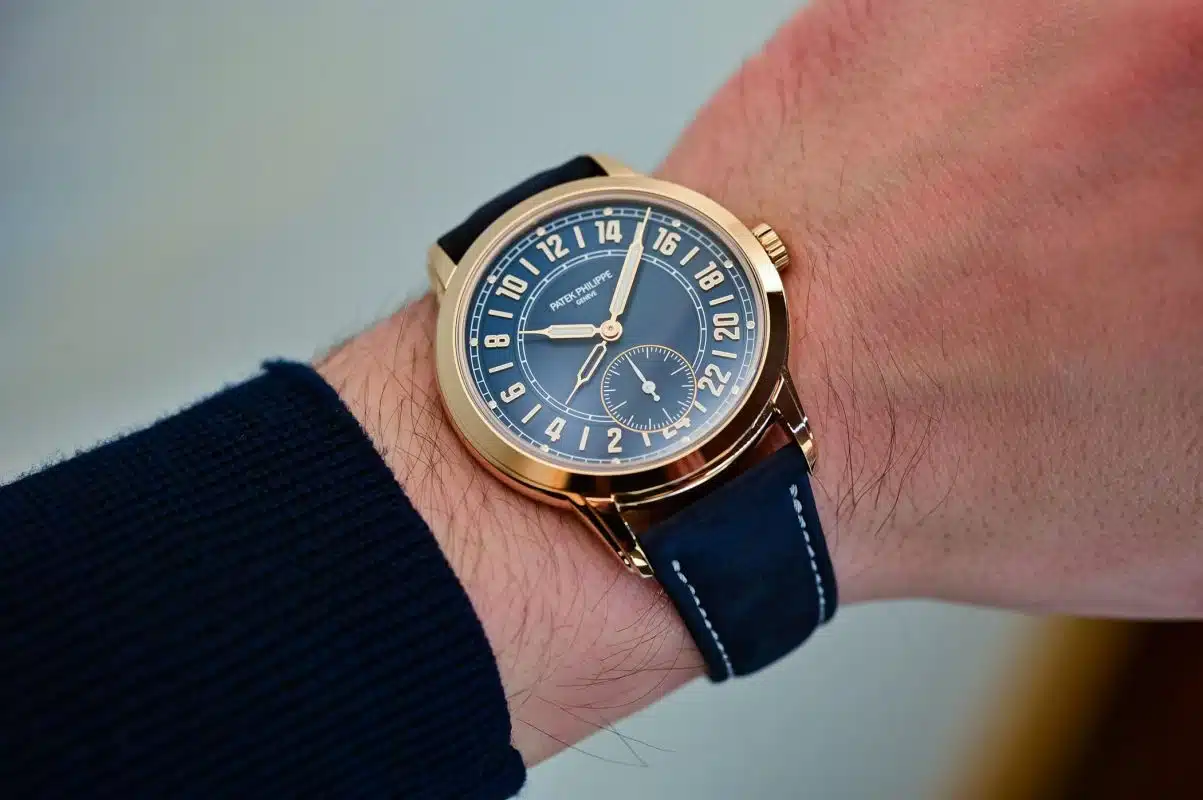
How do men’s and women’s Calatrava models differ?
Men’s Calatravas typically range from 37mm to 40mm in diameter, with clean dials emphasizing functionality and restraint. Contemporary men’s models often feature date complications and center seconds, reflecting practical requirements for daily wear.
Women’s Calatrava models embrace smaller case sizes (typically 33-35mm) and often incorporate decorative elements like diamond hour markers or mother-of-pearl dials. These pieces maintain the collection’s essential character while acknowledging different aesthetic preferences and wrist proportions.
Both categories share the same movement quality and finishing standards, ensuring that women’s Calatravas receive the same horological attention as their masculine counterparts. This egalitarian approach reflects Patek Philippe’s commitment to excellence regardless of market segmentation.
How do you choose the right Calatrava for your style and needs?
Which Calatrava is best for business or formal wear?
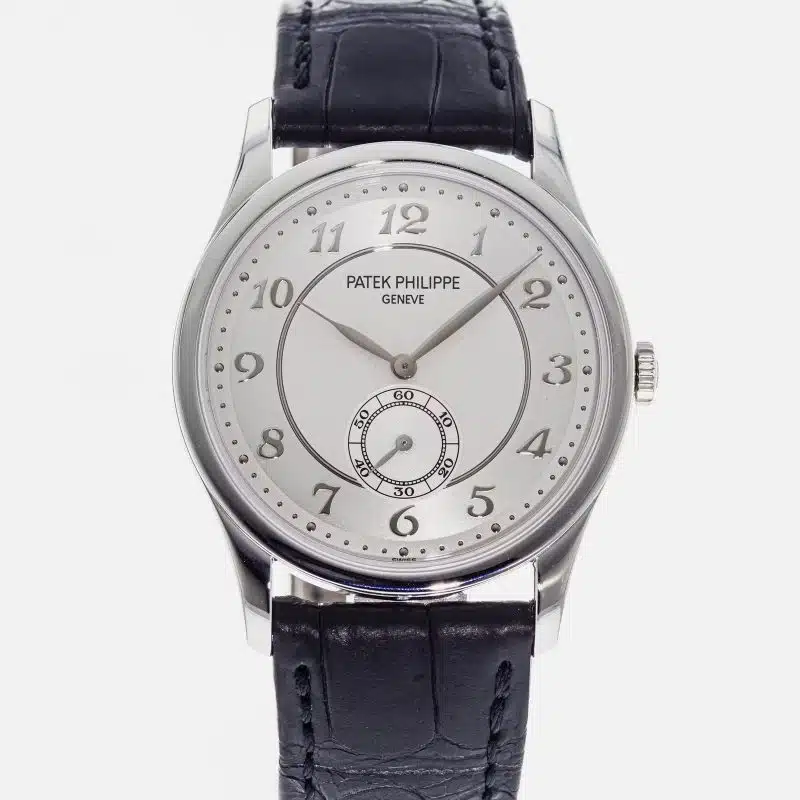
For professional environments, the Reference 5196 with its 37mm case and white dial offers perfect proportions for dress shirt cuffs while maintaining executive presence. Its manual-winding movement requires daily interaction, creating a meditative ritual that many professionals appreciate.
The Reference 5227 provides automatic convenience for busy executives who prefer self-winding reliability. Its 39mm case offers contemporary proportions while the traditional aesthetic ensures appropriate formality for any business setting.
Leather strap selection proves crucial for business wear, with black alligator providing maximum versatility across suit colors. Brown straps offer warmth and character but require careful coordination with shoes and belt choices.
What models work best for special occasions and black tie events?
For formal evening wear, platinum models like the Reference 6196P provide the ultimate in understated luxury. Platinum’s density and rarity make it the perfect complement to formal attire, while its subtle appearance maintains appropriate discretion.
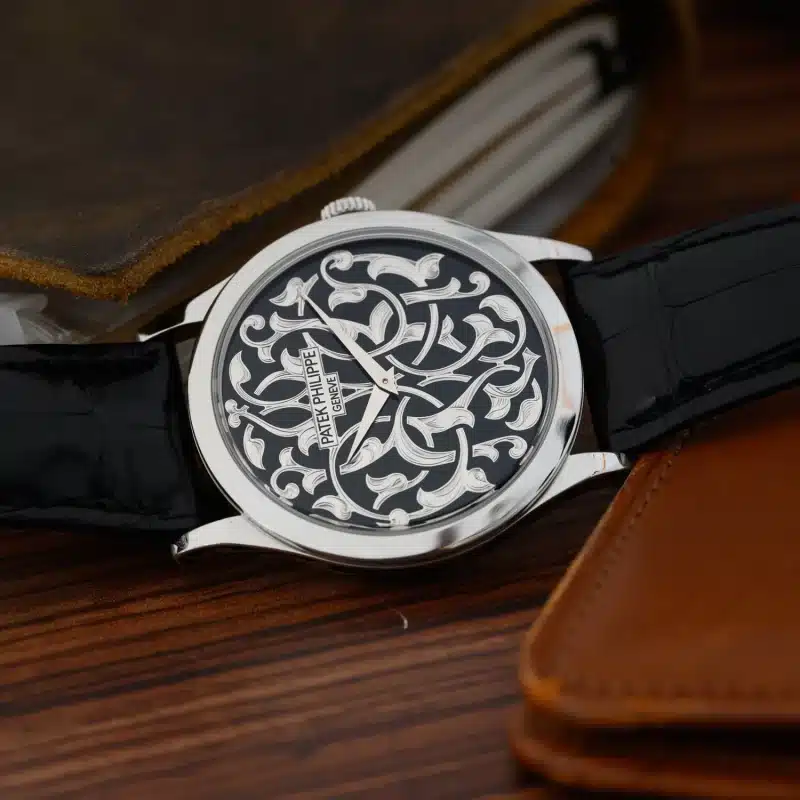
White gold models with dark dials create striking contrasts that photograph beautifully under evening lighting conditions. The interplay between precious metal cases and sophisticated dial colors demonstrates refined taste without ostentation.
Limited editions and special dial variations can serve as conversation pieces among fellow enthusiasts while maintaining the discretion essential to formal wear. These pieces demonstrate deep horological knowledge and appreciation for craft.
How much does a Calatrava cost, and what affects the price?
Entry-level vintage Calatravas begin around $14,000 for well-maintained Reference 96 examples, making them accessible introductions to Patek Philippe ownership. Contemporary models start near $25,000 for steel exhibition pieces and rise to $65,000 for precious metal complications.
Material selection dramatically affects pricing, with gold models commanding $10,000-15,000 premiums over steel, and platinum models adding another $15,000-20,000. These premiums reflect both material costs and the additional craftsmanship required for precious metal cases.
Complication complexity influences pricing significantly, with simple time-only models providing the best value proposition for buyers seeking pure Calatrava aesthetics. Travel time and calendar functions can double or triple base prices while compromising the collection’s essential simplicity.
Is the Patek Calatrava a good investment?
Which Calatrava models have strong resale or appreciation value?
Vintage Reference 96 models have demonstrated exceptional appreciation, with the best examples increasing 44% in value during 2022 alone. Perfect condition examples with original dials and cases represent blue-chip investments within the vintage watch market.
The discontinued Reference 3919 has achieved strong secondary market performance due to its iconic status and 21-year production run. Well-documented examples with complete accessories command premiums reflecting their historical significance within the modern Calatrava lineage.
Limited production models and anniversary pieces consistently outperform regular production watches at auction, with some examples achieving multiples of their original retail prices. These special editions benefit from both scarcity and the storytelling that drives collector demand.
Why is Calatrava considered a “quiet luxury” investment?
The Calatrava embodies stealth wealth principles by providing exceptional quality and exclusivity without obvious branding or flashy aesthetics. Knowledgeable observers recognize the significance of ownership, while casual viewers see simply an elegant timepiece.
Production limitations ensure that demand consistently exceeds supply, creating natural price support for secondary market values. Patek Philippe’s commitment to hand-finished quality prevents mass production from diluting the brand’s exclusivity.
The collection’s cultural significance transcends mere timekeeping, positioning Calatrava ownership as entry into an exclusive community of collectors and connoisseurs. This social capital provides value beyond financial returns, creating emotional attachments that support long-term ownership.
Should you buy Calatrava new or vintage?
New purchases provide manufacturer warranties, pristine condition, and immediate availability, making them ideal for buyers seeking daily-wear timepieces. Authorized dealer relationships also enable access to limited editions and special orders.
Vintage acquisitions offer historical significance, unique character, and potential appreciation that contemporary models cannot match. However, vintage purchases require expertise to avoid restored or modified examples that compromise collectibility.
Condition evaluation proves crucial for vintage purchases, with original dials, cases, and movements commanding significant premiums over restored examples. Reputable dealers and auction houses provide authentication services essential for confident vintage acquisitions.
How does the Calatrava reflect Patek Philippe’s core philosophy?
How does Patek’s famous slogan relate to the Calatrava?
The generational stewardship philosophy embodied in Patek Philippe’s advertising finds its purest expression in the Calatrava collection. These timepieces are designed and constructed to transcend individual ownership, becoming family heirlooms that carry stories and memories across decades.
The Generations campaign, launched in 1996, specifically features Calatrava watches in its emotional portrayals of parent-child relationships. This marketing strategy recognizes that Calatrava owners view their timepieces as more than luxury goods—they are vessels of family heritage and symbols of continuity.
The campaign’s emphasis on “Begin your own tradition” acknowledges that many Calatrava purchasers are establishing new family legacies rather than continuing existing ones. This inclusive message expands the collection’s appeal beyond established wealth to include successful professionals creating their own dynasties.
How do tradition and craftsmanship manifest in every Calatrava?
Each Calatrava represents hundreds of hours of hand labor by Geneva’s most skilled artisans, from case polishing to movement decoration. This commitment to manual craftsmanship preserves traditional skills that industrial production has largely eliminated.
Genevan finishing techniques passed down through generations of watchmakers ensure that every Calatrava movement receives the same level of attention as the most complicated timepieces. This democratic approach to quality reflects Patek Philippe’s belief that every watch deserves excellence regardless of its complexity.
The apprenticeship system that trains new watchmakers ensures continuity of traditional methods while allowing for gradual technical innovation. This balance between conservation and progress enables the Calatrava to embody both historical authenticity and contemporary relevance.
How does Calatrava differ from other Patek Philippe collections?
How is Calatrava different from Nautilus and Aquanaut?
The Calatrava represents formal elegance and traditional values, designed for dress shirts and business suits rather than sports activities. Its precious metal construction and leather straps emphasize luxury over utility, creating timepieces suited for boardrooms rather than beaches.
Nautilus and Aquanaut models embrace sporty aesthetics with integrated metal bracelets, water resistance, and robust construction designed for active lifestyles. These collections target younger demographics and casual luxury markets while maintaining Patek Philippe’s quality standards.
Cultural positioning differs significantly between collections, with Calatrava owners typically seeking discretion and tradition while Nautilus enthusiasts embrace contemporary luxury and status signaling. This segmentation allows Patek Philippe to serve diverse customer preferences within its luxury framework.
What distinguishes Calatrava from Grand Complications?
Grand Complications showcase Patek Philippe’s technical mastery through complex mechanical functions like perpetual calendars, minute repeaters, and chronographs. These timepieces prioritize horological achievement over aesthetic restraint, creating impressive but inherently complicated designs.
The Calatrava emphasizes form and aesthetic harmony over mechanical complexity, finding beauty in simplicity rather than technical achievement. This philosophical difference creates distinct collecting categories within Patek Philippe’s range.
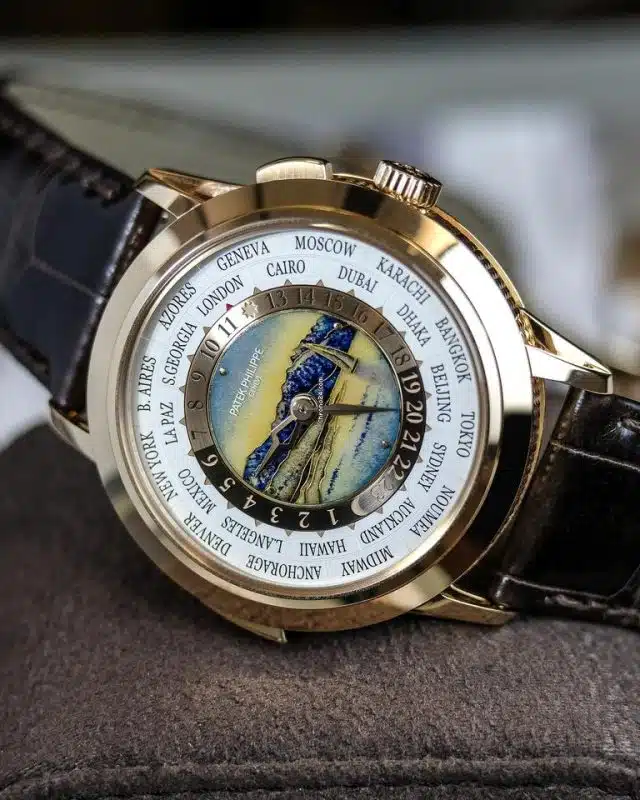
Pricing structures reflect these different priorities, with Grand Complications commanding premium prices for their mechanical sophistication while Calatravas focus on materials, finishing, and design excellence. Both approaches serve different aspects of Patek Philippe’s heritage and customer base.
How should you care for and maintain a Calatrava?
How often should a Calatrava be serviced?
Patek Philippe recommends comprehensive service every 3-5 years, depending on usage patterns and environmental conditions. Regular service prevents component wear that could compromise timekeeping accuracy or mechanical longevity.
Movement condition varies based on individual wearing habits, with daily-wear watches requiring more frequent attention than occasional-use timepieces. Professional evaluation can determine optimal service intervals for specific circumstances.
Authorized service centers provide factory-trained technicians, genuine parts, and warranty protection essential for maintaining Calatrava value and authenticity. Independent watchmakers may offer lower costs but cannot guarantee original components or factory specifications.
What’s the proper way to store and wear a Calatrava?
Safe storage requires dry, temperature-controlled environments away from magnetic fields and direct sunlight. Watch boxes or safes provide protection from physical damage while maintaining proper humidity levels.
Gentle handling proves essential given the Calatrava’s dress watch construction, which prioritizes elegance over shock resistance. Avoiding impacts, extreme temperatures, and water exposure preserves both mechanical function and aesthetic appearance.
Strap maintenance involves regular cleaning and eventual replacement to prevent deterioration that could damage case lugs or buckles. Quality leather straps typically require replacement every 2-3 years depending on wear frequency and care.
Conclusion
The Patek Philippe Calatrava stands as more than a timepiece—it represents the apex of horological artistry married to timeless design philosophy. From its revolutionary 1932 debut through today’s technologically advanced iterations, the collection has maintained an unwavering commitment to the principle that true luxury whispers rather than shouts. In an era of increasing complications and ostentatious displays of wealth, the Calatrava’s restraint becomes its greatest strength, offering discerning collectors an opportunity to own genuine artistry rather than mere status symbols.
For the affluent American consumer seeking to understand luxury’s true meaning, the Calatrava provides an education in appreciation that extends far beyond horology. It teaches that excellence lies in details invisible to casual observation, that beauty emerges from proportion rather than ornamentation, and that lasting value comes from quality that transcends fashion cycles. Whether acquired as a daily companion or a generational heirloom, the Calatrava offers its owner entry into an exclusive community united by appreciation for craft, tradition, and the quiet confidence that comes from knowing one possesses the finest.
The collection’s enduring relevance in contemporary luxury markets demonstrates that authentic elegance never becomes obsolete. As fashion trends cycle and technology advances, the Calatrava remains constant—a beacon of refined taste in an increasingly complex world. For those who understand that true luxury is measured not by its visibility but by its quality, the Patek Philippe Calatrava represents the ultimate expression of horological excellence and the benchmark against which all other classic watches must be measured.
Frequently Asked Questions
The Calatrava is celebrated for its minimalist Bauhaus-inspired design, impeccable proportions, and exceptional craftsmanship. Its slim profile, precious metals, and timeless aesthetic make it the gold standard of dress watches.
Yes. Vintage references like the 96 and discontinued models such as the 3919 have shown strong appreciation. Limited editions and historically significant references often command premiums at auction.
Introduced in 1932, the Calatrava was Patek Philippe’s response to the Great Depression—an elegant, simple wristwatch that reflected the Bauhaus principle of “form follows function.” It marked the start of modern design for the brand.
The Reference 96, the original model, and the 3919 with its Clous de Paris bezel are among the most collectible. Modern icons include the 5196 and the 6119, blending tradition with innovation.
Prices start around $14,000 for vintage pieces and can exceed $60,000 for new models in platinum or with complications. Rarity, materials, and condition significantly affect value.
New models offer warranties and modern movements, while vintage pieces offer historical value and unique character. Both are excellent, but condition and provenance are key when buying vintage.
The Calatrava is a traditional dress watch with leather straps and precious metals, ideal for formal wear. The Nautilus is a sporty luxury watch with an integrated bracelet and casual elegance.
Patek Philippe recommends servicing your Calatrava every 3 to 5 years to maintain performance and preserve long-term value. Always use authorized service centers.
Absolutely. The Calatrava is the epitome of quiet luxury—understated, refined, and known only to true connoisseurs. It doesn’t shout wealth; it whispers taste and heritage.
Men’s models typically range from 37–40mm, while women’s are smaller (33–35mm). Choose based on your wrist size, personal style, and occasion—smaller cases are better for formal dress wear.
 Free Shipping for all orders